Air mattresses provide convenience for guests and travelers. However, waking up to a deflated mattress can be frustrating. “Why does my air mattress keep losing pressure at night?” is a common question. Experts like Sam Johnson, a mattress specialist at Sleep Innovations, have insights. He states, “Temperature changes and small punctures often lead to air loss.”
Many factors contribute to air loss. For instance, air expands and contracts with temperature changes. At night, cooler temperatures can cause the air inside the mattress to shrink. This phenomenon can leave you wondering what went wrong. Additionally, minor punctures or leaks can go unnoticed. It is essential to regularly check for damage and make repairs promptly.
Understanding your air mattress is crucial. Regular maintenance and appropriate setup can help minimize air loss. However, it’s also essential to accept that some issues may arise unexpectedly. A deflated mattress may not always indicate a significant problem. Regular checks and a proper understanding of your mattress can enhance your experience.
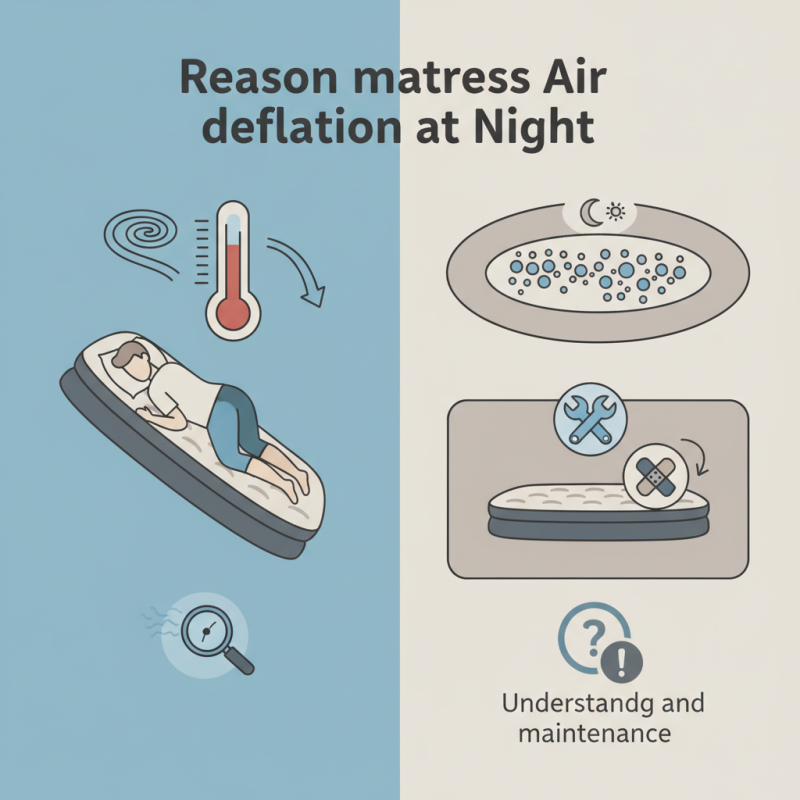
Air mattresses are popular for their portability and comfort. However, many users face the frustrating issue of unexpected air loss during the night. Understanding these common causes can help in addressing the problem effectively.
One primary reason for air loss is small punctures or leaks. According to the American Sleep Association, a single pinhole can cause noticeable air loss over hours. Regularly checking for visible damage or performing a “water test” can reveal hidden leaks. Moreover, the material’s quality plays a role. Cheaper models often use thinner materials, increasing the likelihood of wear and tear.
Temperature fluctuations also contribute to air loss. As the night cools, the air inside the mattress contracts. A report from the National Sleep Foundation indicates that temperature changes can cause a 10-20% decrease in air pressure. This natural phenomenon can lead users to mistakenly believe their mattress is leaking. Ensuring a regularly controlled sleeping environment may mitigate this issue. Prioritize quality construction and care to extend the lifespan of your air mattress.
Temperature changes can significantly affect the air pressure in your mattress. When the temperature drops at night, the air inside the mattress cools down. This causes it to contract, leading to a noticeable loss of inflation. You may wake up feeling less supported than when you fell asleep.
In warmer conditions, the air expands. Conversely, cooler temperatures cause the air to shrink. If your mattress is in a drafty room, fluctuating temperatures can result in a restless night. Many people assume that the mattress has a leak when it deflates. However, temperature is often the real culprit.
Understanding this phenomenon can help you manage your sleeping environment better. Consider using a blanket to insulate your mattress. This simple step can minimize drastic temperature shifts. You might need to re-inflate your mattress more than expected, which is often frustrating. Recognizing these factors can enhance your comfort.
Air mattresses are popular for their convenience and portability. However, many users find them losing air overnight. This phenomenon often stems from the material properties of the mattress, particularly how seams and valve designs interact with air pressure and temperature changes. The materials used are often rubber or PVC, both of which can expand and contract with temperature fluctuations. This can lead to tiny gaps that allow air to escape.
Leakage can also occur at the seams. Over time, the adhesives or stitching used may weaken. A small puncture can significantly impact the overall firmness of the mattress. Regularly checking for visible wear or damage is essential. Using a light soap solution to check for leaks can be effective. The solution creates bubbles at the site of air leaks. A more proactive approach involves proper storage and handling. Avoiding sharp objects and excessive weight can prolong a mattress's life.
User experiences can vary. Some may notice their mattress seems to lose air faster than others. This could indicate an underlying issue, like how they set up the mattress. Setting it over uneven surfaces can lead to stress points. Regular maintenance checks and mindful usage can help mitigate these air loss issues.
Maintaining an air mattress is crucial for a good night’s sleep. One key aspect is preventing air loss. Regularly check for punctures or leaks. A small hole can lead to significant air loss overnight. Use a mild soap solution to find leaks. If bubbles form, you’ve found the issue.
Storing your air mattress correctly extends its life. Keep it in a dry place. Avoid sharp objects nearby. Too much heat can damage the material. Consider using a protective cover while storing. This simple step can prevent unwanted abrasions.
Additionally, air mattresses require careful inflation. Over-inflation can stress seams. Follow the manufacturer’s guidelines for air levels. Remember, temperature changes affect air pressure. Consider these details when setting up your mattress. By keeping these points in mind, you can enhance the lifespan and comfort of your air mattress.
Many air mattress users report a recurring issue: their mattress loses air overnight. Industry statistics reveal that nearly 30% of air mattress owners experience deflation problems. According to a study by the Sleep Foundation, unintentional air loss impacts sleep quality and comfort significantly. In a survey conducted among users, 58% noted they woke up feeling less rested due to air loss.
Several factors contribute to this phenomenon. Temperature fluctuations cause the air inside the mattress to expand and contract, leading to leaks. Daily wear and tear can also create tiny punctures. Surprisingly, many users overlook these issues until they affect sleep directly. Regular inspections and maintenance can help maintain the mattress's longevity.
Tips: Check for visible punctures often. Applying a small amount of soapy water can reveal leaks that are hard to find. If you notice constant deflation, consider moving to a different location where temperature changes are minimal. Cleaning the mattress surface regularly can also prevent material degradation.
: Temperature changes can cause air in the mattress to contract or expand, impacting inflation levels.
Cooler night temperatures can cool the air inside, leading to a loss of inflation.
Look for punctures or leaks. Small holes can lead to significant air loss.
Use a mild soap solution. If bubbles form, you’ve found the leak.
Keep it in a dry area, away from sharp objects and excessive heat.
Follow the guidelines provided. Over-inflation can stress seams and create issues.
Yes, they can lead to a restless night due to deflation and discomfort.
Regular inspections are vital. Look for signs of wear and leakage frequently.
Consider moving it to a location with minimal temperature changes.
Yes, cleaning the surface helps prevent degradation and enhances longevity.
Air mattresses are convenient for temporary sleeping arrangements, but many users face the frustrating question: "Why does my air mattress keep losing pressure at night?" Common causes of air loss include small leaks, faulty valves, and the impact of temperature changes, which can cause the air inside the mattress to contract. Additionally, understanding the material properties of air mattresses is crucial, as certain fabrics may be more prone to leakage.
To mitigate these issues, proper maintenance and care are essential. Regularly inspecting the mattress for punctures and ensuring the valve is functioning properly can significantly extend its lifespan. Industry statistics show that many consumers report experiencing air deflation, highlighting the importance of awareness and proactive measures in maintaining air mattress performance for a comfortable night's sleep.

Zenith Medical