How to Choose the Best Walking Aid for Stroke Recovery?

Time:2026-09-11 Author:Ethan
0%

Choosing a walking aid after stroke is not about finding the most expensive or advanced device. It is about matching support to balance, strength, coordination, vision, and confidence.

Which walking aid is best for stroke rehabilitation? There is no universal answer. A physiotherapist or occupational therapist should assess gait, posture, leg control, hand function, and fall risk. A cane may suit someone with mild weakness and reliable balance. A quad cane can provide a broader base. A hemi-walker or standard walker may help when one side remains significantly weak. Rollators can support longer walks, but their wheels require controlled braking and attention.

Small details matter. Can the user grip the handle securely? Can they lift the device without dragging it? Does it fit beside a narrow bathroom doorway? The correct height should support an upright posture, not force the shoulder upward. During practice, clinicians may watch each step across a hallway, near a chair, and over a doorstep. Real environments expose problems that a clinic floor can hide.

Safety comes before speed.

A walking aid should support recovery, not replace active movement. Incorrect use may encourage leaning, poor foot placement, or dependence on the stronger side. Even experienced professionals can underestimate fatigue, especially late in the day. That is worth reconsidering. A suitable device may change as strength improves, balance fluctuates, or confidence returns. Regular review, careful instruction, and honest feedback create a safer path toward independent mobility.
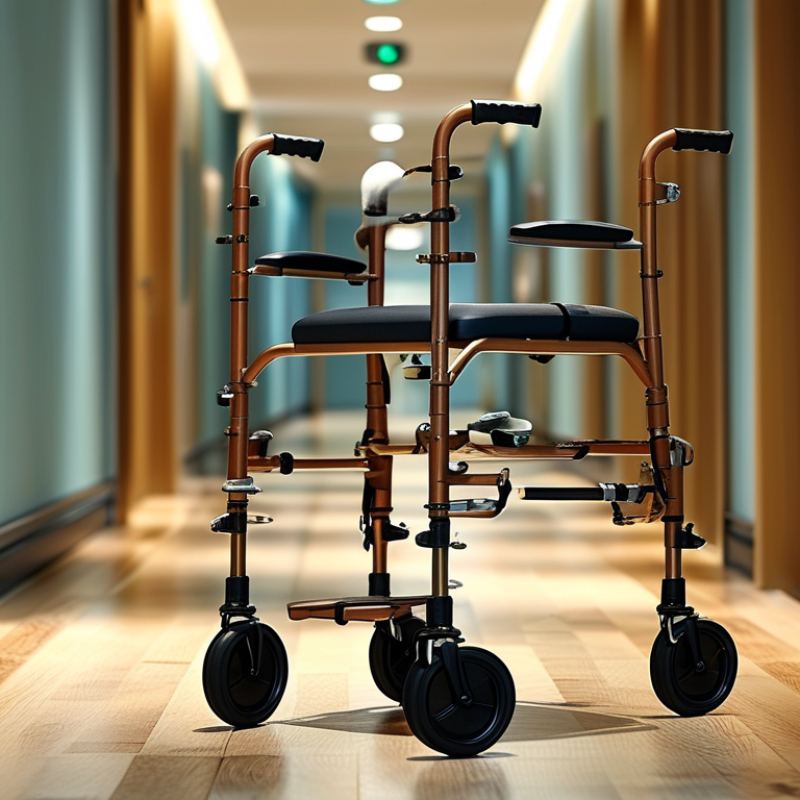
How to Choose the Best Walking Aid for Stroke Recovery?

Understanding Mobility Needs After Stroke

After a stroke, mobility needs can change from morning to afternoon. Weakness, poor balance, pain, vision changes, and fatigue may all affect walking safety. The best walking aid is not always the most advanced one. It should match your current ability, home environment, and recovery goals.

A single-point cane may help someone with mild weakness and steady balance. A quad cane offers a wider base but may slow movement. A walking frame can provide more support, especially during early recovery. However, more support does not automatically mean better walking. An aid that is too heavy or poorly adjusted may encourage leaning, shorten steps, or increase shoulder strain.

Assessment matters. A physiotherapist or occupational therapist can check strength, walking pattern, turning, transfers, and fall risk. They should also observe real situations, such as stepping over a doorway or walking on uneven ground. Height must be fitted carefully, with the handle near the wrist crease when standing upright. Small details matter.

Your home deserves attention too. Loose rugs, narrow passages, and dim stairs can change the safest choice. Practice should begin on a clear, familiar surface. Stop when your leg drags or your attention fades. Progress is rarely perfectly linear. Some days may feel disappointing, and that does not mean recovery has stopped. Reassessment is useful when balance changes, falls occur, or the aid begins to feel awkward.

How to Choose the Best Walking Aid for Stroke Recovery

The 10-Meter Walk Test is commonly used in stroke rehabilitation to describe functional walking ability. A slower gait speed may indicate the need for greater stability, such as a cane or walker, while faster and safer walking may support progression toward less restrictive assistance. Walking-aid selection should also consider balance, leg strength, endurance, cognition, home layout, and assessment by a qualified clinician.

Assessing Balance, Strength, and Walking Safety

Choosing a walking aid after stroke should begin with safety, not convenience. A clinical assessment should examine balance, leg strength, posture, vision, sensation, and fatigue. The National Clinical Guideline for Stroke recommends checking mobility and falls risk before prescribing equipment. This matters because reviews report post-stroke fall rates ranging from about 14% to 73%, depending on the population and follow-up period.

A therapist may use the Timed Up and Go, 10-Meter Walk Test, and Five Times Sit-to-Stand test. These measurements show how quickly a person walks, rises, turns, and controls movement. Still, no single score settles the decision. A cane may suit someone with mild weakness and reliable balance. It can be unsafe when the person grips furniture, leans heavily, or forgets the correct sequence. A wheeled walker may provide broader support, but poor braking control or weak hand strength can increase risk.

Watch the details. Does the aid stay flat on the floor? Can the user turn without dragging it? Can they manage a doorway, wet bathroom tile, or a small step? The American Heart Association and American Stroke Association advise individualized rehabilitation based on mobility limits and functional goals. Height adjustment also matters; the elbow should remain slightly bent while holding the handle. My cautious view is that an aid should be reassessed after strength, balance, or walking speed changes. A device that helped last month may now restrict safer movement.

How to Choose the Best Walking Aid for Stroke Recovery? - Assessing Balance, Strength, and Walking Safety

Walking Aid Balance Support Required Arm and Grip Strength Best Suited For Walking Environment Key Safety Considerations Fitting and Training Needs
Single-Point Cane Low to moderate
Provides one contact point and limited lateral support.
Moderate grip, shoulder, and elbow control are needed. The user must be able to bear some weight through the hand. People with mild balance impairment, adequate leg strength, and a relatively stable walking pattern. Generally suitable for level indoor surfaces and short outdoor walks on smooth, predictable ground. May provide insufficient support for significant weakness, frequent falls, marked dizziness, or poor coordination. It is usually held on the side opposite the weaker leg unless a clinician advises otherwise. Handle height should allow a slight elbow bend while standing upright. A physical therapist should assess gait pattern and cane placement.
Quad Cane Moderate
Its broader base offers more stability than a single-point cane.
Moderate hand and upper-limb strength are required, although it can reduce the amount of balance control needed from the legs. People who need more support than a single-point cane but can still advance the aid safely and maintain upright posture. Useful indoors and on firm, even outdoor surfaces. The larger base can be awkward in narrow spaces or on uneven ground. The base must remain fully in contact with the floor. Dragging, catching the feet on the base, or moving too quickly can increase fall risk. Correct orientation of the base and appropriate height are important. Practice is needed to coordinate cane movement with the weaker leg.
Tripod or Small-Base Cane Moderate
Offers more contact with the floor than a single-point cane but less than a walker.
Moderate grip and arm strength are generally needed. People requiring a little additional stability who are not ready for a standard single-point cane. Best on smooth, firm surfaces. Small multi-point bases may be less stable on soft or irregular terrain. Check that all contact points are intact and touching the floor. It should not be used as the sole support for severe balance loss. Requires individual adjustment and gait training, particularly when turning, stepping over thresholds, or using stairs.
Two-Wheeled Walker High
Provides a wide base of support while allowing forward movement.
Moderate arm strength and sufficient hand control are needed to guide and stop the walker. It is not intended for heavy downward loading through weak arms. People with moderate balance limitations or leg weakness who can stand reasonably upright and control the device. Most appropriate for level indoor surfaces and smooth, firm outdoor paths. It may be difficult over thresholds, loose gravel, or steep slopes. Do not pull up on the walker to stand. Advance it a short distance, keep it close to the body, and step into the frame without walking too far behind it. Handle height should permit relaxed shoulders and slight elbow flexion. Supervised practice is recommended for turning, transfers, and uneven surfaces.
Standard Walker Very high
Four fixed legs provide a large, stable base when the device is placed correctly.
Moderate to high arm and shoulder strength are required because the user must lift and reposition the walker. People needing substantial stability who can lift the device and coordinate a step-by-step walking pattern. Usually best for indoor use on firm, level flooring. It is less practical on stairs, ramps, and uneven outdoor surfaces. Lift and place the walker rather than dragging it. Avoid using it on stairs unless specifically trained and supported by a professional. Proper height adjustment and instruction are essential. A therapist should assess whether the user can safely lift, place, and move it.
Four-Wheeled Rollator Moderate
Offers a broad base and continuous movement but less braking stability than a fixed walker.
Moderate grip, hand coordination, and sufficient strength to operate both hand brakes are required. People who can walk continuously but need support for balance, endurance, or rest breaks and can manage the brakes safely. Can be useful indoors and outdoors on firm, relatively smooth surfaces. It is less suitable for very uneven ground or confined spaces. Brakes should be tested before every use. Lock the brakes before sitting or standing, keep the rollator close, and avoid leaning excessively forward. Handle height must allow upright posture. Users need training in braking, turning, negotiating slopes, and sitting safely on the seat if present.
Forearm Crutches Moderate to high
Can provide strong support but require coordinated control and balance.
Good arm, wrist, hand, and trunk control are needed. They require more coordination than many walkers. People with adequate upper-limb strength who need to reduce weight through one or both legs and can follow a coordinated gait pattern. May be used indoors and outdoors, but uneven surfaces and stairs require specific training and good balance. Incorrect cuff or handgrip position can cause discomfort or nerve pressure. Do not rest body weight on the forearm cuff alone. Individual fitting is essential. Training should cover gait sequence, turning, stairs, transfers, and safe placement of the crutch tips.
No Walking Aid Depends on ability
Appropriate only when balance is adequate without external support.
Normal functional arm use is not required for support, but the person must safely protect themselves during loss of balance. People who demonstrate stable walking, safe turning, adequate leg control, and no clinically significant fall risk during assessment. May be reasonable indoors first, followed by progressively more challenging environments when safety is demonstrated. Independence should not be judged only by walking speed. Fatigue, impulsivity, visual problems, neglect, dizziness, and dual-task difficulty must also be considered. A clinician should reassess walking over time because recovery, fatigue, strength, and balance may change during stroke rehabilitation.

Clinical note: The safest walking aid depends on the person’s balance, leg and arm strength, coordination, vision, cognition, sensation, endurance, home layout, and fall history. A physical therapist or other qualified rehabilitation professional should complete the assessment, fit the device, and provide walking and transfer training.

Comparing Different Types of Walking Aids

How to Choose the Best Walking Aid for Stroke Recovery?

Walking aids differ in stability, weight, maneuverability, and training demands. A standard cane offers light support for survivors with reasonable balance and one-sided weakness. However, it requires controlled hand use and accurate foot placement. A quad cane provides a wider base, but its larger tip may catch on carpets or uneven flooring.

A standard walker gives more stability when leg strength and balance remain limited. It can feel safer, although lifting it repeatedly may increase arm fatigue. A wheeled walker allows smoother movement and requires less lifting. It may move too quickly for someone with poor braking control. A physiotherapist should assess walking speed, posture, grip strength, turning, and transfers before recommending one. NICE guideline NG128 specifically supports individualized mobility assessment during stroke rehabilitation.

The global need is substantial. The World Stroke Organization’s Global Stroke Fact Sheet 2022 reported 12.2 million new strokes and over 101 million people living with stroke effects worldwide. Yet, strong head-to-head evidence comparing walking aids remains limited. A Cochrane review on stroke mobility interventions also noted variation in study quality and outcomes. This matters in practice. The most expensive or supportive device is not automatically safest. A cane that encourages an upright step may outperform a walker used with poor technique. Reassessment is essential as strength changes. Small details matter: rubber tips, stair practice, indoor thresholds, and the user’s confidence. I would not ignore fear, either. It can quietly change gait and increase hesitation.

Matching Walking Aid Features to Daily Activities

Choosing a walking aid should begin with daily routines, not appearance. In 2021, an estimated 11.9 million people experienced a new stroke worldwide, according to the Global Burden of Disease Study published in The Lancet Neurology. Many survivors need support across changing environments. A walking stick may suit short indoor trips when balance loss is mild. A wheeled walker can provide steadier support during longer walks. However, its wheels may move too quickly on uneven ground.

Match the aid to specific tasks. In a narrow kitchen, check whether the frame allows safe turns near counters. For stairs, a therapist should assess whether a stick, rail, or another strategy is safer. Outdoors, larger wheels may handle pavement better, while hand brakes matter on slopes.

A seat can help during fatigue, but it may encourage unsafe sitting without brake control. The American Heart Association and American Stroke Association recommend task-specific, repetitive mobility practice during stroke rehabilitation. Therefore, test the aid while carrying a light bag, opening a door, and rising from a chair.

Fit is not permanent. Strength, vision, coordination, and confidence can change weekly. A 2023 Cochrane review noted limited certainty around the best walking interventions, reminding clinicians to individualize decisions.

Measure handle height, observe posture, and inspect worn tips regularly. The “most supportive” device may become restrictive. That judgment can be imperfect. Reassess after real use, especially after fatigue, near-falls, or changes in home layout.

Testing, Adjusting, and Reviewing the Chosen Aid

Choosing a walking aid is only the beginning of stroke recovery. The chosen aid should be tested in real situations, not just beside a clinic chair. A physiotherapist or occupational therapist can observe balance, step length, grip strength, and fatigue. They should also check the floor, stairs, bathroom, and outdoor surfaces. A perfect fit on paper can fail at home.

Tips: Walk slowly on a clear, familiar path. Check that the aid stays stable during turning. Notice wrist, shoulder, hip, or knee pain. Ask someone to watch for leaning, dragging feet, or unsafe reaching. Keep handles level with the wrist when standing naturally, unless a clinician recommends another height. Small adjustments matter.

Review the aid after several days, then again after changes in strength or balance. Stroke recovery is not always steady. An aid that feels helpful today may become awkward later. However, progress can also create overconfidence. That mistake is easy to make. Record when the aid is used, where problems appear, and how tiredness affects movement. Share these details with a qualified clinician. They may adjust the height, change the aid, or recommend supervised practice. Never modify a walking aid without professional guidance, especially if pain, repeated stumbling, or sudden weakness appears.

FAQS

: How do I choose a walking aid after a stroke?

: A clinician should assess balance, leg strength, grip, posture, turning, and transfers. Daily tasks matter more than appearance. The best choice may change.

When might a standard cane be suitable?

A standard cane may help someone with mild balance loss and one-sided weakness. It requires controlled hand use and accurate foot placement. Poor technique can reduce safety.

What are the benefits and limits of a quad cane?

A quad cane offers a wider base and more support than a standard cane. Its larger tip may catch on carpets, thresholds, or uneven floors. Test it at home.

When is a standard walker useful?

A standard walker can help when leg strength and balance remain limited. It provides strong support but requires repeated lifting. Arm fatigue may develop.

How does a wheeled walker differ from a standard walker?

A wheeled walker moves more smoothly and needs less lifting. However, it may roll too quickly for someone with weak braking control. Slopes require extra caution.

How should daily activities influence the choice?

Test the aid near kitchen counters, bathroom surfaces, stairs, doors, and outdoor paths. Try turning, carrying a light bag, and rising from a chair. Real life exposes problems.

How can I check whether the aid fits correctly?

Handles usually align near the wrist when standing naturally. A clinician may recommend another height. Observe leaning, foot dragging, or unsafe reaching.

When should the walking aid be reviewed?

Review it after several days and after changes in strength, balance, vision, or confidence. Also reassess after fatigue, pain, near-falls, or home changes. Progress can create overconfidence.

What warning signs require professional advice?

Seek qualified guidance for repeated stumbling, sudden weakness, persistent pain, or unsafe movement. Do not alter the aid independently. Small adjustments can matter greatly.

Conclusion

Choosing the right walking aid is an important part of stroke recovery because mobility needs can change over time. Start by considering the person’s balance, leg strength, coordination, endurance, and risk of falling. A cane may provide light support, while a walker can offer greater stability for someone with significant weakness or balance difficulties. Other options may be appropriate depending on walking ability, posture, and the level of assistance required.

Which walking aid is best for stroke rehabilitation? The answer depends on the individual’s condition, environment, and daily activities. The aid should match practical needs, such as moving around the home, using stairs, walking outdoors, or completing rehabilitation exercises. It should be tested and adjusted by a qualified healthcare professional to ensure the correct height, fit, and technique. Regular reviews are also important, since strength, balance, and confidence may improve during recovery, making a different aid more suitable later.

Ethan

Ethan

Ethan is a seasoned marketing professional with a deep expertise in our company's innovative product line. With a passion for sharing knowledge and insights, he takes the lead in regularly updating our corporate blog, where he explores industry trends, product features, and effective marketing......