Trendelenburg positioning tilts a hospital bed so the head is lower than the feet. The change is visible at a glance: a patient’s legs rise, the torso slopes, and staff must check lines, breathing, and comfort. What are the benefits of Trendelenburg position in hospital beds? The answer depends on the patient, the clinical goal, and careful supervision. It is not a universal treatment.
A useful clinical reminder, expressed here as a paraphrase rather than a verbatim quotation from critical-care physician Dr. Jean-Louis Vincent, is: “Use positioning for a defined purpose, and reassess its effects on the individual patient.” That caution matters. Trendelenburg may help clinicians access certain areas during specific procedures, and it can support selected examination or care tasks. Yet it should not be presented as a dependable way to improve circulation or treat shock. Research and modern clinical guidance have questioned those assumptions, while a head-down tilt may worsen breathing, raise pressure in the head, or increase discomfort for some patients.
The seven benefits in this article are therefore practical possibilities, not promises. Each depends on patient assessment, bed design, and staff expertise. A few minutes can matter. So can a small change in angle. Hospitals should follow local protocols and monitor the patient throughout positioning. Even a familiar bed control deserves thought. Not every patient should be tilted, and that limitation belongs in any honest discussion of benefits.
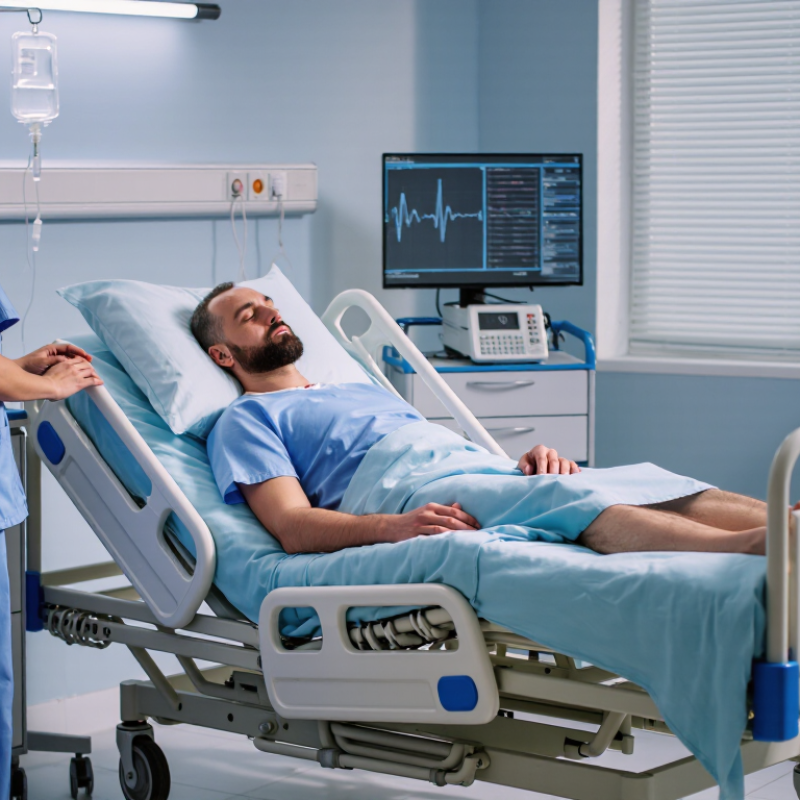
The Trendelenburg position places a patient flat on their back, with the bed tilted so the head is lower than the feet. The angle varies according to the clinical purpose and the patient’s condition. Staff adjust the bed rather than asking the patient to slide downward. That detail matters: sliding can cause friction, discomfort, or strain.
This position may be used briefly during selected procedures or for specific clinical needs. It is not a dependable treatment for shock or low blood pressure. A head-down tilt can also make breathing harder, increase pressure in the head, or worsen reflux. The effects depend on the person, the angle, and how long the position is maintained. It is not suitable for everyone.
Tips: Ask the care team why the position is needed and how long it will last. Keep the patient’s body aligned, and check that bedding or tubing is not pulling. Tell staff promptly if breathing feels difficult, nausea develops, or discomfort increases. Small changes can matter. A patient may look settled while still feeling unwell, so regular checks are important.
Tilting a hospital bed so the head is lower than the feet may briefly shift blood toward the chest. This can produce a temporary rise in venous return and alter blood pressure readings. The change is not the same as restoring healthy circulation. It may be short-lived, and it does not reliably improve oxygen delivery to vital organs.
That distinction matters. In some patients, extra blood returning to the heart can increase strain, particularly when heart function is limited. A head-down tilt can also make breathing harder by pressing abdominal contents toward the chest. It may raise pressure inside the head or eyes, and it can increase discomfort or the chance of fluid entering the airway. Small changes in position can matter.
Clinical use should depend on the patient’s condition, not on a presumed circulatory benefit. Staff need to monitor breathing, blood pressure, comfort, and the reason for positioning. A tilted bed is not a substitute for assessment or established treatment for shock. The position may look reassuring. That impression deserves a second look. The safest angle and duration vary, and some patients should not be placed head-down at all.
In selected laparoscopic pelvic procedures, a clinician may tilt the operating table so the head is lower than the feet. Gravity can shift some abdominal organs away from the pelvis, giving the surgical team a clearer working space. The angle and duration depend on the procedure and the patient’s condition. More tilt is not automatically better. The team monitors breathing, circulation, and pressure on the shoulders and skin, especially during longer operations.
A gentle head-down tilt may also be used briefly during certain internal jugular vein procedures. It can make the vein more prominent, helping a trained clinician assess or access it. The position is not suitable for everyone, including some people with breathing difficulty or raised pressure in the head. Small angles matter. For examinations, clinicians may use a bed tilt to observe how body position affects findings, but it is not a routine requirement for every test. They should explain the reason, check comfort, and return the bed to a neutral position when the tilt is no longer needed. The benefits can be useful, but the evidence and risks vary by patient and procedure.
The Trendelenburg position tilts a patient with the head lower than the feet. Its usefulness depends on the procedure and the patient; the benefits below describe potential assistance, not guaranteed outcomes.
| Potential benefit | How the position may assist | Selected procedure or examination | Important consideration |
|---|---|---|---|
| 1. Improves access to the pelvis | With the patient tilted head-down, gravity can help move abdominal contents away from the pelvic operative field. | Laparoscopic pelvic surgery, including selected hysterectomy procedures. | The degree of tilt is chosen by the surgical team and should be no greater or longer than needed. |
| 2. Supports visualization in robotic pelvic surgery | Head-down positioning can help keep the pelvis accessible to the surgeon and robotic instruments by shifting abdominal contents upward. | Selected robot-assisted gynecologic or urologic operations. | Steep or prolonged positioning may affect breathing and circulation; the anesthesia and surgical teams monitor the patient throughout. |
| 3. Helps expose the lower abdominal operative field | Changing the angle of the bed can assist gravity-dependent displacement of bowel away from the lower abdomen. | Selected lower abdominal operations when the surgeon needs improved access to the operative site. | It is an adjunct to surgical technique and does not guarantee better visualization in every patient. |
| 4. Can assist access to the lower pelvis in colorectal surgery | Head-down tilt may help create working space in the pelvis during selected minimally invasive procedures. | Selected rectal or other low pelvic operations. | Positioning needs vary with the operation, patient anatomy, and equipment; pressure points and secure positioning require attention. |
| 5. May distend central veins during selected catheter procedures | A mild head-down tilt can increase venous filling in the neck and upper chest, which may assist access and help reduce air entry risk in appropriate circumstances. | Selected internal jugular or subclavian central venous catheter placement or removal. | It is not a substitute for ultrasound guidance, appropriate catheter technique, or standard air-embolism precautions; it may not be suitable for every patient. |
| 6. Can assist selected pelvic examinations | When clinically appropriate, a modest tilt may help the examiner assess pelvic structures by changing the relationship of abdominal contents to the pelvis. | Selected examinations where the clinician needs additional pelvic visualization or access. | It is not required for routine pelvic examinations; the clinician selects the position according to the examination and patient comfort. |
| 7. Allows adjustable positioning using a hospital bed | A tilting bed can provide a controlled, adjustable angle and help the clinical team maintain a planned position during a procedure. | Procedures requiring temporary head-down positioning, as determined by the care team. | Use bed safety features and appropriate supports to reduce sliding, skin pressure, and nerve-injury risk. |
Safety note: Trendelenburg positioning can reduce respiratory compliance and increase airway pressures. Prolonged or steep tilt may also contribute to facial or airway swelling, pressure injury, or nerve injury. The care team should assess individual risks, use the least tilt and duration needed, and monitor the patient according to clinical protocols.
In an emergency, Trendelenburg positioning places a patient flat with the feet raised above the head. It may be used briefly during selected procedures, such as central venous catheter placement, when a clinician judges that a head-down tilt could help expose the neck veins. The angle should be controlled, not guessed. Staff can adjust the hospital bed while monitoring the patient’s breathing, oxygen level, blood pressure, and comfort.
It is not a dependable treatment for shock, and raising the legs does not replace urgent assessment or resuscitation. The position may make breathing harder or increase pressure in the head, so it may be unsuitable for some patients, including those with respiratory distress or suspected head injury. The detail is easy to miss: a position that helps with one procedure can become the wrong choice minutes later. Clinicians should reassess often, use the least tilt needed, and return the patient to a safer position when the procedure or immediate need ends.
Trendelenburg positioning lowers the head and raises the feet, but it is not suitable for every patient. Clinicians should choose it for a clear, time-limited clinical reason, rather than assuming the tilt will improve circulation or breathing. Review the patient’s diagnosis, blood pressure, respiratory status, and ability to tolerate a head-down position. Not for everyone. Increased pressure in the head, breathing difficulty, reflux, or unstable heart and lung conditions may make the position risky. Individual assessment matters.
Before adjusting the bed, explain the planned change and check for discomfort or anxiety. Record baseline vital signs and confirm that oxygen tubing, drains, and intravenous lines have enough slack. Check the airway. During positioning, observe breathing effort, oxygen levels, blood pressure, skin color, and the patient’s reported symptoms. Reassess often. A brief check after the tilt is not always enough; monitor continuously when the patient’s condition or local protocol calls for it. Return the bed toward neutral if the patient deteriorates, becomes distressed, or develops new symptoms.
Keep the patient centered, with the head and limbs supported, and use safe bed-handling procedures. Avoid sliding the patient, which can increase shear across the shoulders, sacrum, and heels. Confirm that bed rails and other safeguards are appropriate, without restricting movement unnecessarily. Document the indication, angle, duration, observations, and response. If the benefit is unclear, pause and reconsider the plan with the responsible care team.
The patient lies on their back while the bed tilts, placing the head lower than the feet. Staff adjust the bed to avoid sliding.
It may be used briefly for selected procedures or specific clinical needs. The reason and duration should be clear.
No. It may briefly shift blood toward the chest, but this does not reliably restore circulation or oxygen delivery. A tilt is not a substitute for assessment or established treatment.
It may make breathing harder, worsen reflux, or increase pressure inside the head or eyes. It can also strain the heart in some patients. Effects vary.
They consider the patient’s diagnosis, blood pressure, breathing, and ability to tolerate the position. Unstable heart or lung conditions may make it risky. Individual assessment matters.
They should explain the change, check vital signs, and ensure tubing and drains have enough slack. The patient should remain centered, with limbs supported.
Staff may watch breathing effort, oxygen levels, blood pressure, skin color, and reported symptoms. Reassess often. A brief check may not be enough.
Tell staff promptly about breathing difficulty, nausea, or increasing discomfort. The bed may need to return toward neutral. A calm appearance does not always mean comfort.
What are the benefits of Trendelenburg position in hospital beds? This position places a patient on their back with the head lower than the feet. In selected situations, it can help clinicians gain access or improve visibility during certain examinations and procedures. A brief change in posture may also influence blood flow, but any circulatory effect is temporary and does not make the position a reliable treatment for shock or other serious conditions.
Trendelenburg positioning may be considered as part of emergency care when clinically appropriate, but it is not suitable for every patient. It can worsen breathing difficulties, raise pressure in the head or eyes, or cause discomfort, particularly when used for too long. Careful patient selection, monitoring, and attention to the patient’s condition are essential. Clinicians should weigh potential procedural or positioning advantages against possible risks and adjust or stop the position if the patient shows signs of distress.
Zenith Medical