How to Measure Doorways for Wheelchair Accessibility?

Time:2026-06-13 Author:Liam
0%

When considering wheelchair accessibility, doorways serve as crucial points of entry. Knowing "how to measure a doorway for wheelchair accessibility?" is essential for creating safe spaces for everyone. Experts emphasize that accurate measurements are fundamental. John Smith, a leading accessibility consultant, once said, “Every inch matters when it comes to creating accessible environments.”

A typical wheelchair requires at least 32 inches of clear width to pass through a doorway comfortably. Therefore, measuring accurately can prevent unnecessary obstacles for users. Remember, this process is not just about numbers; it is about enabling freedom of movement. Many people overlook the importance of proper height and threshold measurements as well.

Improperly measured doorways can lead to frustrating experiences for wheelchair users. It emphasizes the need for meticulous attention to detail. Assessing doorways should always be approached with a mindset geared toward inclusivity and practicality. Even small miscalculations can result in significant barriers. Therefore, understanding how to measure a doorway for wheelchair accessibility is not just about compliance; it is about empathy, community, and support.
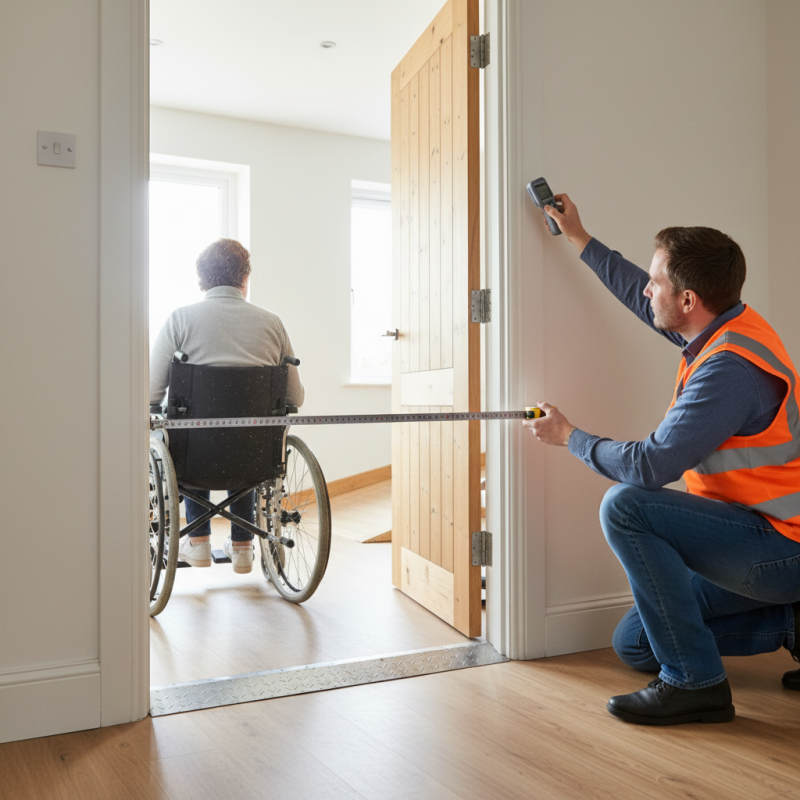
How to Measure Doorways for Wheelchair Accessibility?

Understanding Wheelchair Accessibility Requirements for Doorways

Measuring doorways for wheelchair accessibility is crucial. Understanding the requirements can maximize safety and convenience. The Americans with Disabilities Act (ADA) sets essential standards. Doorways should ideally be at least 32 inches wide. This width allows most wheelchairs to pass through comfortably.

When measuring, consider the frame’s width too. If the frame adds width, adjust your doorway dimensions. The height is equally important. Standard door height should be at least 80 inches but can vary based on local codes. It's wise to check guidelines for your area.

Tip: Always account for changes in flooring. A threshold can impact accessibility. Make sure flooring is even across the entrance to avoid bumps. It’s also essential to check the door swing. Doors that open outward can take up needed space. A sliding door might be a better option. Take the time to measure accurately. Even small discrepancies can create big barriers.

Measuring the Width of Doorways for Wheelchair Access

When measuring doorways for wheelchair access, width is crucial. A standard wheelchair generally requires a minimum of 32 inches to pass through comfortably. If the doorway is too narrow, it can create significant barriers. Accurate measurements are vital. Use a tape measure to check the width at the narrowest point of the doorway. Sometimes, moldings and door hardware can obstruct the space.

Take note of the height as well. Some wheelchairs are taller, especially when used with specialized seating. A height of at least 80 inches is recommended to allow for easy maneuvering. It’s also important to assess the door's swing direction. Ideally, doors should open outward or slide open, reducing the space needed for wheelchair entry.

In some cases, existing door frames may not meet these guidelines. This could lead to frustrating obstacles for users and caregivers. Addressing these issues proactively can lead to improvements in accessibility. Overall, measuring doorways accurately promotes independence.

Assessing Doorway Height and Clearance for Wheelchairs

When assessing doorway height for wheelchair accessibility, it is crucial to adhere to established guidelines. In the United States, the Americans with Disabilities Act (ADA) recommends a minimum doorway height of 80 inches. This standard allows most wheelchair users to pass through comfortably. However, many older buildings may not meet this requirement. A recent report highlighted that approximately 28% of public buildings fail to provide adequate height clearance.

In addition to height, clearance width is vital. Doorways should measure at least 32 inches wide when the door is open at a 90-degree angle. This width helps ensure that manual and powered wheelchairs can pass through without difficulty. Consider this: many doorways in homes and older facilities are only 30 inches wide, limiting access for individuals who rely on mobility aids. This gap indicates a need for renovation in many spaces to promote inclusivity.

Many wheelchair users face challenges beyond just measurements. Unforeseen obstacles can persist, such as door frames and hinges that may cause narrow pathways. Users often prefer door mechanisms that can be operated with minimal force, enhancing access. Regular assessments can help identify these issues, prompting necessary adjustments to ensure true accessibility in all environments.

How to Measure Doorways for Wheelchair Accessibility?

Dimension Minimum Requirement Recommended Standard Comments
Doorway Width 32 inches (81 cm) 36 inches (91 cm) Ensures easy maneuverability
Doorway Height 80 inches (203 cm) 80 inches (203 cm) Standard height for most doorways
Threshold Height 1/2 inch (1.3 cm) 1/4 inch (0.6 cm) Should be beveled for easy access
Clearance Space 18 inches (46 cm) on pull side 24 inches (61 cm) recommended Allows wheelchair to turn and maneuver
Operating Force 5 lbs (2.3 kg) 3 lbs (1.4 kg) recommended Easier for individuals with limited strength

Evaluating Doorway Maneuverability and Turn Radius

When considering wheelchair accessibility, evaluating doorway maneuverability and turn radius is crucial. According to the Americans with Disabilities Act (ADA), doors should have a minimum clear width of 32 inches when open. However, that is just part of the equation. The turning radius inside and outside of the doorway plays a significant role in overall accessibility.

Measured correctly, the ideal turning radius for a standard wheelchair is about 60 inches. This space allows users to pivot and maneuver comfortably. If the space is too tight, individuals may struggle and feel unsafe. It's essential to account for furniture placement and any protruding fixtures around doorways. These can impact the ease with which a person can navigate.

Tips: Ensure there are no obstacles within the turning radius area. Mark potential hazards clearly. Regularly evaluate accessibility as furniture arrangements may change.

It’s also important to assess door type. Sliding doors are generally more accessible than traditional hinged doors. Hinged doors need additional clearance for users to swing them open. Even slight design flaws can result in significant challenges for wheelchair users. Regular checks can help identify areas needing improvement to enhance overall access.

Ensuring Compliance with Accessibility Standards and Guidelines

Measuring doorways for wheelchair accessibility is crucial for compliance with established standards. According to the Americans with Disabilities Act (ADA), doorways must be a minimum of 32 inches wide. This width is essential for most standard wheelchairs. If doorways are not wide enough, individuals may struggle to pass through.

Proper measurements should account for clear opening space. This includes space needed for wheelchair maneuverability. A clear space of at least 48 inches in depth should be ensured when a door swings open. Failure to comply with these guidelines can lead to accessibility issues and limit mobility. According to the National Institute of Health, approximately 1 in 7 adults in the U.S. experience mobility difficulties. Ensuring compliance with these standards not only promotes inclusivity but also enhances the usability of spaces.

Some designs may fall short of these requirements, leaving users frustrated. Anecdotal evidence suggests that inadequate door sizes often lead to avoidable barriers. Even with good intentions, without proper measurement, accessibility can suffer. Spaces need continual evaluation to ensure they meet evolving accessibility standards and guidelines. Each doorway must be re-evaluated to guarantee it serves everyone effectively.

Doorway Measurements for Wheelchair Accessibility

FAQS

: Why is measuring doorway width important for wheelchair access?

: Measuring doorway width ensures that most wheelchairs, needing at least 32 inches, can pass through comfortably.

What is the recommended height for doorways?

A standard doorway height should be at least 80 inches to accommodate various wheelchair sizes.

How do I measure the width of a doorway?

Use a tape measure at the narrowest point of the doorway. Consider obstructions like moldings and hardware.

What should I consider regarding the door swing?

Ideally, doors should open outward or slide. This reduces space needed for wheelchair entry.

How does flooring impact wheelchair accessibility?

Uneven flooring or thresholds can create bumps. Ensure a smooth transition across the entrance for safe passage.

What should I do if my doorway doesn't meet accessibility standards?

Address these issues proactively. Small adjustments can significantly improve accessibility for users.

Can existing frames be problematic for wheelchair access?

Yes, if they are too narrow or obstructive. This can create frustrating barriers for users and caregivers.

Why is it essential to measure accurately?

Even small discrepancies can create big barriers, affecting safety and independence for wheelchair users.

Conclusion

When considering how to measure a doorway for wheelchair accessibility, it's essential to understand the key requirements for ensuring safe and easy access. First, measuring the width of doorways is crucial, as it should ideally be at least 32 inches to accommodate most wheelchairs. Additionally, assessing the doorway height and clearance is important to ensure there are no obstructions that could impede movement.

Moreover, evaluating doorway maneuverability and turn radius is necessary, as this allows wheelchair users to navigate through spaces comfortably. It is also vital to ensure compliance with established accessibility standards and guidelines, which provide the framework for creating accessible environments. By taking these factors into account, one can effectively address the needs of wheelchair users and create welcoming spaces.

Liam

Liam

Liam is a dedicated marketing professional with a profound expertise in the industry, where he excels at highlighting the unique advantages of our core products. With a keen understanding of market trends and consumer needs, Liam frequently updates our company’s professional blog, providing......