Top 10 Differences Between Transport Stretchers and Emergency Trolleys?

Time:2026-05-25 Author:Amelia
0%

In the healthcare sector, understanding the tools and equipment used for patient transport is crucial. An insightful distinction lies between a transport stretcher and an emergency trolley. According to a 2023 report by the Healthcare Equipment Research Institute, nearly 70% of hospitals consider efficient patient transfer equipment essential for effective emergency response.

"What is the difference between a transport stretcher and an emergency trolley?" Dr. Emily Chen, a leading authority in emergency medical services, states, “The nuances in design significantly impact patient outcomes during critical situations.” Transport stretchers typically prioritize ease of movement and patient comfort, making them ideal for transporting stable patients. In contrast, emergency trolleys are designed for immediate care, equipped with intricate features for urgent medical intervention.

Many healthcare providers struggle with choosing the right equipment under pressure. Factors such as weight capacity, maneuverability, and specific use cases often lead to confusion. This highlights the need for ongoing education in the field. Familiarity with these differences ensures that medical teams can provide the best care possible in emergencies. Understanding each tool's unique capabilities can lead to improved patient safety and outcomes.
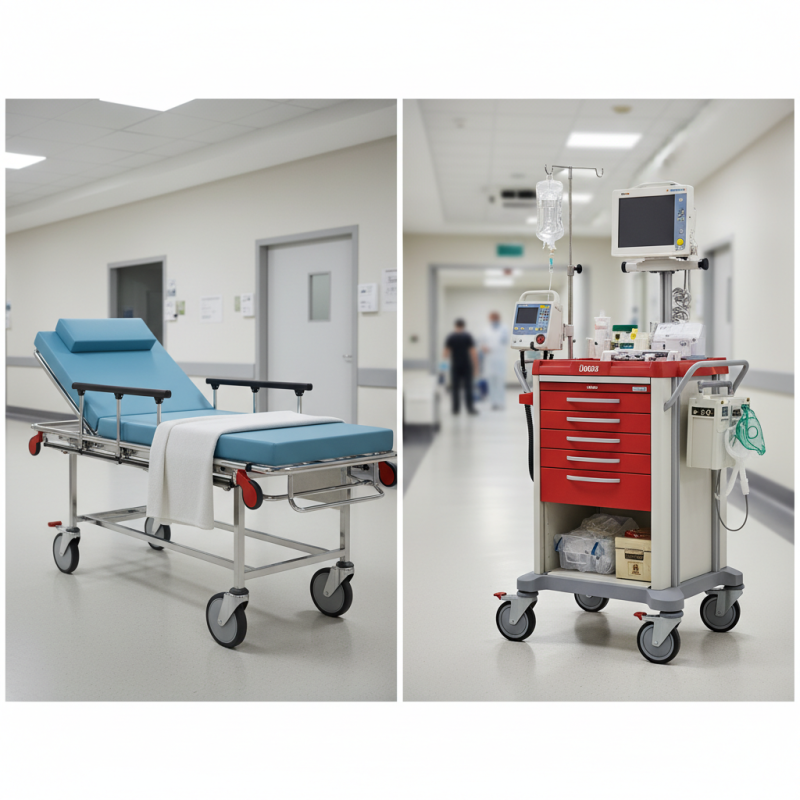
Top 10 Differences Between Transport Stretchers and Emergency Trolleys?

Key Features of Transport Stretchers

Transport stretchers play a vital role in emergency medical services. They are designed for safe patient transport and come with various key features essential for efficient handling. Many stretchers have adjustable heights, allowing for seamless transfers between surfaces. A report by Healthcare Today indicates that top models reduce strain on healthcare workers by up to 30%. This ergonomic aspect is crucial, given the high rate of workplace injuries in this field.

Another significant feature is the collapsible design. This compactability enhances storage and transport convenience, a key consideration in emergency situations. Research shows that stretchers with a foldable frame can save 40% more space in ambulances. Despite these benefits, some models lack advanced safety features like side rails. Healthcare professionals should reflect on these gaps when selecting equipment.

Weight capacity is also critical. Many transport stretchers can support heavier patients, accommodating up to 500 pounds. However, not all models meet this standard, which can lead to challenges during emergencies. It is essential to assess the specifications against the demands of real-life scenarios. Choosing the right stretcher can significantly influence patient care and staff safety. Balancing features, weight, and usability is necessary for optimal results.

Essential Characteristics of Emergency Trolleys

Emergency trolleys play a crucial role in urgent medical care. They are designed specifically for fast, efficient patient transport. Often, they include essential medical equipment, drugs, and supplies. This feature sets them apart from standard transport stretchers. Emergency trolleys have compartments for immediate access to crucial items. This organization can save vital seconds in critical situations.

Another key characteristic of emergency trolleys is their adjustability. Many models allow height adjustments for better access to patients. This is particularly important in crowded emergency rooms or during transfers. The wheels of these trolleys are engineered for stability and mobility. A smooth-rolling design helps navigate tight spaces quickly. It’s essential for emergency responders to maneuver effectively in chaotic environments.

Additionally, the construction of emergency trolleys must withstand rigorous use. They are built with durability in mind, often featuring materials resistant to spills and easy cleaning. Over time, their condition may decline if not properly maintained, which can compromise safety. This makes regular checks essential for ensuring reliability in emergency situations. It's a constant reminder that even well-designed equipment requires attention to detail.

Top 10 Differences Between Transport Stretchers and Emergency Trolleys

Feature Transport Stretchers Emergency Trolleys
Purpose Primarily designed for transporting patients Used for emergency medical situations including treatment
Mobility Lightweight for easy transport Wheeled for quick movement and maneuverability
Construction Typically made from lightweight materials Sturdier construction with additional medical equipment
Patient Positioning Flat, often not adjustable Adjustable to various positions for treatment
Storage Minimal storage space for equipment Includes compartments for medical supplies
Weight Capacity Limited to patient weight only Higher capacity to accommodate additional gear
Usage Environment Used mainly in non-emergency transport situations Designed for use in emergency situations
Cost Generally less expensive Typically more expensive due to features
Customization Limited customization options Often customizable based on medical needs
Foldability Usually foldable for storage Typically does not fold for stability

Primary Uses and Applications in Medical Settings

Transport stretchers and emergency trolleys play crucial roles in medical settings. Both are designed for moving patients, but they have distinct applications. Transport stretchers are lightweight and portable, often utilized in non-emergency situations. In contrast, emergency trolleys are built for immediate response. They are equipped with medical supplies, enhancing their functionality during critical care.

According to a report by the World Health Organization, about 60% of emergency medical services rely on well-equipped emergency trolleys to efficiently manage patient care in hospitals and ambulances. These trolleys often feature foldable designs, allowing easy storage when not in use. They facilitate rapid access to life-saving equipment, which can significantly impact patient outcomes. A study published in the Journal of Emergency Medicine highlighted that quick access to medical supplies improves survival rates in emergency cases.

Despite their importance, there are ongoing discussions regarding training and standards for personnel using these devices. Some reports suggest that inadequate training compromises the effectiveness of emergency trolleys. Additionally, the weight and bulkiness of certain models can hinder rapid transportation. This discrepancy highlights a need for continuous improvement in design and training protocols. Balancing functionality with ease of use remains a challenge worth addressing in medical equipment advancements.

Mobility and Portability Differences

When examining mobility and portability, transport stretchers and emergency trolleys differ significantly. Transport stretchers are often lightweight and designed for quick patient transport across short distances. Their primary function focuses on ease of movement within facilities. Most models fold easily, enhancing storage efficiency. These features make them suitable for tight spaces in hospitals or during patient transfer in ambulances.

Emergency trolleys, on the other hand, prioritize stability and functionality during emergencies. They are bulkier and equipped with multiple compartments for medical equipment. These trolleys are less portable than stretchers due to their weight and size. Moving them requires more effort, often necessitating additional personnel. While this limits agility, it ensures critical medical supplies are available directly where they are needed.

In practical terms, a stretcher might be used to navigate crowded hallways swiftly, while a trolley can serve as a mobile emergency room during a crisis. The distinct designs cater to different scenarios. Despite their differences, each has a vital role in patient care. Understanding mobility and portability nuances can aid healthcare providers in choosing the right equipment for their specific needs.

Safety Mechanisms and Patient Comfort Comparisons

When comparing transport stretchers and emergency trolleys, safety mechanisms play a crucial role. Transport stretchers typically focus on stability and security. They usually include safety straps and padded sides. These features help keep patients secure during transport. Emergency trolleys often prioritize quick access. They are designed for rapid response during critical situations. Quick-release mechanisms on trolleys allow for jarring movements. This can compromise patient safety if not used carefully.

Another important aspect is patient comfort. Transport stretchers often provide cushioning and adjustable headrests. This ensures patients have a more pleasant experience. Occasionally, the design of emergency trolleys may sacrifice comfort. The rigid framework is more about utility than patient comfort. Some trolleys lack sufficient padding. As a result, patients might feel the impact of every bump.

Both options have unique features that cater to specific needs. Choosing between them requires understanding the context of use. Reflecting on these differences can lead to better decisions in medical settings. There is no one-size-fits-all solution. It's vital to assess each situation carefully. Exploring these details can improve patient care significantly.

Top 10 Differences Between Transport Stretchers and Emergency Trolleys

This bar chart illustrates the key differences between transport stretchers and emergency trolleys across various dimensions. The scores represent a comparative analysis based on weight capacity, safety mechanisms, patient comfort, and usage environment among others.

FAQS

: What are transport stretchers used for?

: Transport stretchers are essential for safe patient transport in emergency medical services.

Why is adjustable height important in stretchers?

Adjustable heights facilitate seamless transfers between different surfaces, enhancing patient safety.

How do collapsible designs benefit transport stretchers?

Collapsible designs save storage space, making them convenient for emergency situations.

What is the weight capacity of most transport stretchers?

Many can accommodate patients weighing up to 500 pounds, but not all models meet this standard.

What makes emergency trolleys different from stretchers?

Emergency trolleys include compartments for medical supplies, ensuring quick access during urgent situations.

Why is the mobility of transport stretchers emphasized?

They are lightweight, designed for quick movement across short distances within healthcare facilities.

What should be monitored for emergency trolleys?

Regular maintenance is crucial to ensure they remain functional and safe for rigorous use.

Are emergency trolleys portable?

No, emergency trolleys are bulkier and require more effort to move due to their size and weight.

How do healthcare workers select the right equipment?

They should reflect on features, weight capacities, and usability based on real-life demands and scenarios.

What’s a critical consideration in emergency equipment?

Attention to detail in equipment maintenance is essential for reliability and safety in emergencies.

Conclusion

The article "Top 10 Differences Between Transport Stretchers and Emergency Trolleys" delves into the fundamental distinctions between these two essential pieces of medical equipment. It outlines key features of transport stretchers, which are primarily designed for patient transportation in various settings, emphasizing their lightweight construction and ease of mobility. In contrast, the essential characteristics of emergency trolleys are explored, highlighting their multifunctionality and stability, which are crucial during critical care situations.

Furthermore, the article examines their primary uses and applications in medical settings, illustrating how each is tailored to specific scenarios. It also addresses mobility and portability differences, demonstrating that while transport stretchers prioritize ease of movement, emergency trolleys offer more robust support. Lastly, safety mechanisms and patient comfort comparisons are discussed, underscoring how design choices impact patient care. Ultimately, the question, "What is the difference between a transport stretcher and an emergency trolley?" is answered through an in-depth analysis of these vital healthcare tools, guiding professionals in selecting the appropriate equipment for their needs.

Amelia

Amelia

Amelia is a seasoned marketing professional with a wealth of expertise in our company’s core offerings. With an unwavering passion for driving growth and innovation, she plays a pivotal role in shaping our marketing strategies and enhancing brand visibility. A key aspect of her responsibilities......